
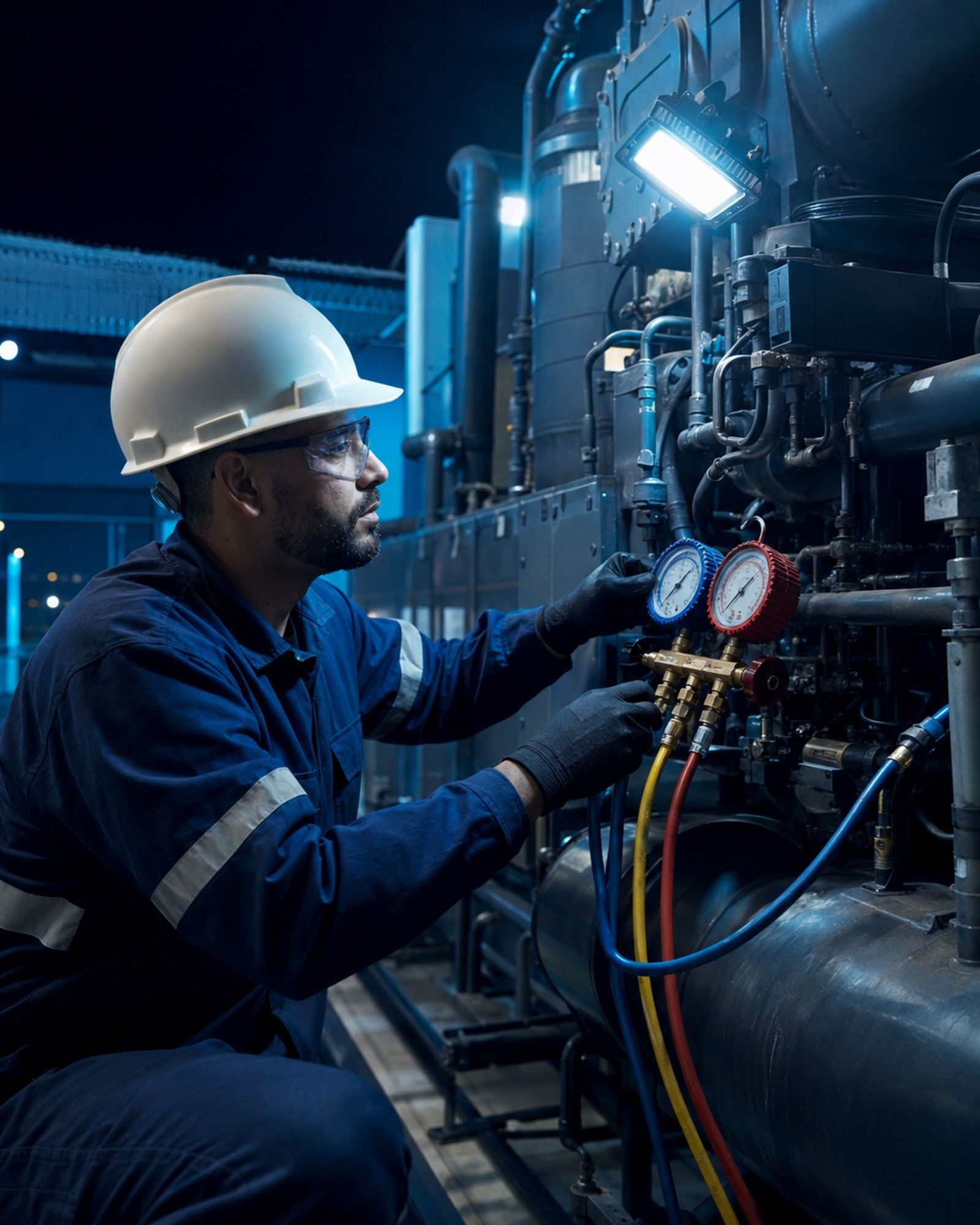
When a cold room does not reach temperature, the cause is almost always one of these: low refrigerant, impaired heat exchange (dirty condenser or iced-up evaporator), stopped fans, a poorly sealed door, a compressor or electrical fault, a misadjusted control or a thermal load above what the system can handle. Several causes produce the same symptom, so a diagnosis with instruments is what determines the fix. This guide shows the signs of each one and what to do until the technician arrives.
The 8 most common causes
-
Low refrigerant
It is almost always a leak: refrigerant does not get used up on its own. Performance drops gradually, the compressor runs longer and oil sometimes appears on fittings. Topping up refrigerant without finding and fixing the leak only delays the failure.
-
Dirty condenser or stopped condenser fan
The condenser releases the heat removed from the room. With dirty fins or a stopped fan, that heat stays trapped, pressure rises and the compressor loses performance or trips on its protection. Signs: a very hot outdoor unit, fins covered in dust, a fan that does not turn.
-
Iced-up evaporator
Ice on the evaporator blocks airflow and heat exchange. It usually comes from a defrost cycle that does not complete (heater, sensor or programming), a clogged drain or humid air coming in. Sign: a block of ice on the fins and weak cold air coming out of the evaporator.
-
Stopped evaporator fans
Without air circulation, the cold stays trapped at the evaporator and the rest of the room warms up, even with the compressor running. Sign: no airflow or an unusual noise from the fan motor.
-
Door and seal
A damaged gasket, or a door that does not close on its own or stays open too long, lets in warm air and moisture. Besides warming the room, this speeds up ice formation on the evaporator.
-
Compressor or electrical fault
A compressor that does not start, trips on its thermal protection or short cycles points to a mechanical or electrical fault: starting components, contactors, a missing phase or abnormal voltage. Signs: a silent unit, a breaker that keeps tripping or a burning smell at the panel.
-
Misadjusted controller or sensor
A changed setpoint or a faulty or badly placed temperature sensor makes the system stop too early or never stop. Sign: the display shows a temperature different from what a reference thermometer reads.
-
Load above what the system can handle
Product arriving warm, doors open for long periods at peak times or an operation that grew without adjusting the system can demand more cooling than the equipment delivers. Sign: the room holds temperature on quiet days and loses it on the busiest ones.
How the technician confirms the cause
The diagnosis starts from measurements with the system running: pressures, temperatures, superheat and subcooling show whether refrigerant is low, heat exchange is impaired or the compressor has lost performance. Current measurements and an inspection of the electrical panel point to starting and protection faults. Once the cause is confirmed, the fix comes with the root cause recorded in the service report.
When to call corrective maintenance
- Room above the specified temperature and rising
- Compressor stopped or tripping
- Temperature alarm that does not clear
- Evaporator blocked by ice
- Suspected refrigerant leak
- Electrical fault in the control panel
Frio Ideal runs a 24/7 on-call service, including nights, weekends and holidays, for systems from any manufacturer. Technical triage starts at first contact. Arrival time depends on location and contract terms.
How to keep it from happening again
Most of these failures give signs before the room stops: rising pressure, abnormal current, longer defrost cycles, accumulated dirt. Preventive maintenance scheduled by the criticality of each system catches these signs in time, with a technical report at every visit. For rooms left unattended at night and on weekends, 24-hour monitoring shortens the time between a deviation and action.
FAQ
Is a cold room that is barely cooling always low on refrigerant?
No. A dirty condenser, an iced-up evaporator, a stopped fan and a damaged seal produce the same symptom. Only measurement confirms it.
Can I top up the refrigerant to fix it?
Without finding and fixing the leak, the refrigerant runs low again. It is a job for a technician, with a leak test before charging.
The room stopped overnight or on a weekend. What should I do?
Protect the product (doors closed, temperature written down) and call the 24/7 on-call service by phone or WhatsApp.
Tell us about your cold room
Share the type of cold room, the city and state, and what is happening.
- 24/7 emergency service
- In-house engineering in the field
- Over 15 years in operation
- Smart Cold authorized service provider